
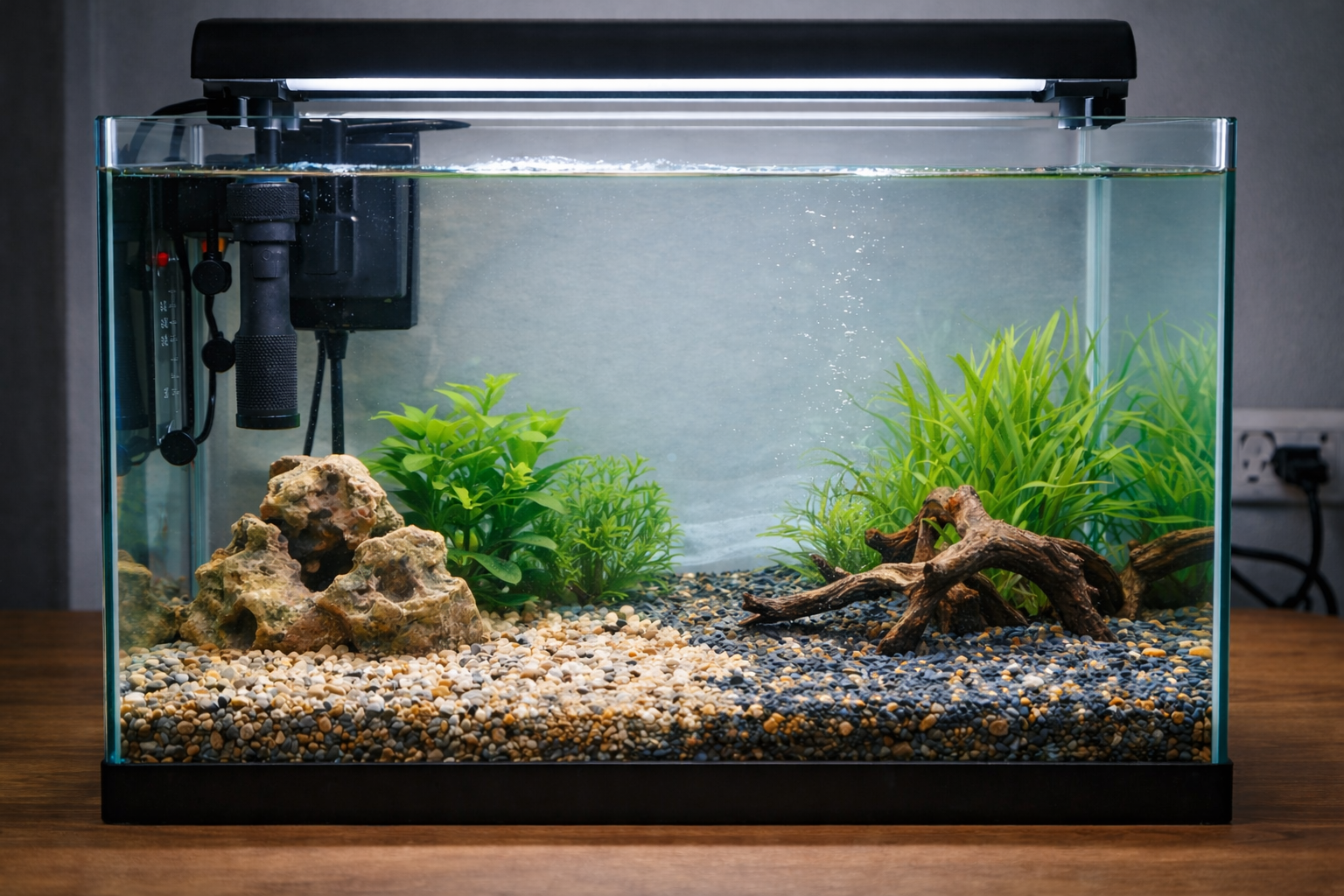
Setting up a freshwater aquarium the right way from the beginning helps prevent common problems like cloudy water, stressed fish, and equipment failure. By following a clear step-by-step process, beginners can create a stable and healthy aquarium that is easy to maintain.
This guide walks you through exactly how to set up a freshwater aquarium, from choosing the right location to safely adding fish once the tank is ready.
Long-term success with a freshwater aquarium depends not only on proper setup, but also on consistent aquarium maintenance, including water changes, filter care, and regular testing.
Choosing the Right Location for Your Aquarium
The location of your aquarium plays a major role in water stability and fish health. Choose a flat, sturdy surface that can support the full weight of the tank once it is filled with water, gravel, and equipment.
Avoid placing the aquarium in direct sunlight or near windows, as this can cause rapid temperature changes and excessive algae growth. The tank should also be close to an electrical outlet and easily accessible for regular maintenance.
Preparing the Tank and Equipment
Before setting up the aquarium, rinse the empty tank, filter, heater, and decorations using clean water only. Never use soap or household cleaners, as even small residues can be harmful to fish.
This step removes dust and debris from manufacturing and storage, ensuring that everything is safe to use once water is added to the aquarium.
Adding Substrate and Decorations
Substrate such as gravel or sand should be rinsed thoroughly before being added to the tank. This helps prevent cloudy water during the initial setup.
Once the substrate is in place, add decorations like rocks, driftwood, or artificial plants. Arrange them in a way that provides hiding spots while leaving open swimming space for fish.
Filling the Aquarium and Treating Water
Slowly fill the aquarium with tap water to avoid disturbing the substrate and decorations. Placing a small plate or bowl on the substrate can help disperse the water gently.
After filling the tank, add a water conditioner to remove chlorine and other harmful chemicals found in tap water. This step is essential before running any equipment or adding fish.
Installing Filter, Heater, and Lighting
Install the filter, heater, and lighting according to the manufacturer’s instructions. The filter should be positioned to provide good water circulation, while the heater should be fully submerged and set to the appropriate temperature for freshwater fish.
Once everything is installed, turn on the equipment and allow the aquarium to run. This ensures that all systems are working properly before moving on to the next step.
Starting the Aquarium Cycle
The aquarium cycle is a biological process that establishes beneficial bacteria needed to break down waste in the tank. Running the aquarium without fish allows these bacteria to develop naturally and stabilize water conditions.
Cycling typically takes several weeks and is one of the most important steps in setting up a freshwater aquarium. Skipping this process often leads to unhealthy water and fish loss.
When Is It Safe to Add Fish?
Fish should only be added once the aquarium cycle is complete and water parameters are stable. This ensures a safe environment that minimizes stress and health risks for new fish.
When adding fish, introduce them slowly and avoid overstocking the tank. Gradual stocking helps maintain water quality and gives the aquarium time to adjust.